
Devil's
Millhopper State Geological Park
Pictures and a video from the natural
sinkhole located in Gainesville Florida known as Devil's Millhopper.
 First |
 Previous |
 Home |
 Next |
 Last |
Page 2 of 3
Gainesville Florida May 2006 Main Menu
 |
 |
 |
|
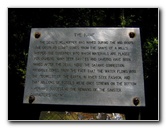
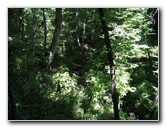
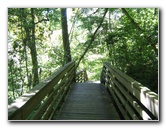
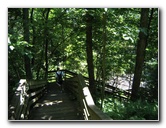
Part of the reason that this natural sinkhole was named Devil's Millhopper is that it once contained millions of fossils and animal remains. Also the water flowing down into the "bowels" of the earth reminded people of the River Styx. Both these characteristics led to the sinister name of this educational and beautiful natural formation. The trip up and down the stairs of the Devil's Millhopper is quite a workout. It's no surprise that on any given day you'll find several people supplementing their fitness plans with a few rounds on this bargain "Stairmaster". On each landing of the stairway there are informational signs that give insight into various features of the sinkhole. |
||
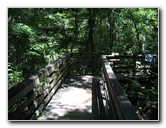 |
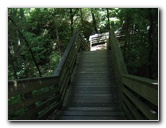 Devil's Millhopper Stairway |
 |
|
If you haven't already, check out my panoramic video clip of Devil's Millhopper to get a partial visual and auditory experience of this Gainesville Florida attraction. |
||
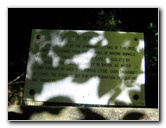 Limestone Bedrock Sign |
 |
 |
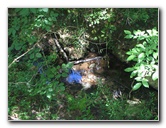
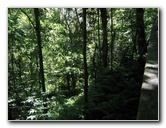
| The bedrock of this area of Florida is composed of Limestone which formed from the remains of marine animals and other natural materials. Limestone is easily dissolved by the weak acids that naturally occur in water. Over thousands of years water flowing through the bedrock forms underground caverns that lead to sinkholes. | ||
 |
 Animal Life Sign |
 |
|
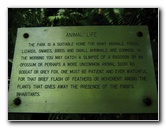
The Devil's Millhopper sinkhole is home to many animals including snakes, lizards, frogs, turtles and a variety of birds. Other creatures that have been spotted occasionally in the park include Raccoons, Opossums, Bobcats, and Grey Foxes. |
||
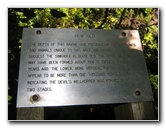 "How Old" Sign |
 |
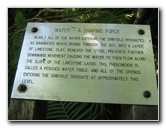 "Water - A Shaping Force" |
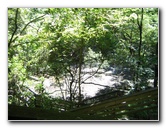
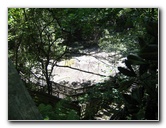
| The two signs in the row above deal with the age of Devil's Millhopper and how water shaped the ravine. Certain plants, animals and archaeological clues lead scientists to believe that the upper half of the sinkhole is about ten to fifteen thousands years old while the lower more vertical section is only about a thousand years old. All of the water that enters the sink hole is rainwater that drains through the soil and into the limestone. Once the water hits a deeper clay layer, it stops and flows along the limestone creating a "perched water table". | ||
 |
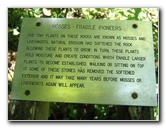 "Mosses - Fragile Pioneers" |
 |
|
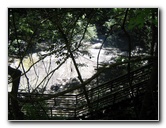
The flow of water within the Devil's Millhopper sinkhole has softened the surfaces of the rocks which allows small plants called mosses and liverworts to flourish. Then larger plants can root themselves on the moisture rich moss beds. |
||
Gainesville Florida May
2006 Main Menu
|
First |
Previous |
Home |
Next |
Last |
Copyright 2024 © PaulsTravelPictures.com
All Rights Reserved ®
| Paul's Travel Pictures is a participant in the Amazon Services LLC Associates Program, an affiliate advertising program designed to provide a means for sites to earn advertising fees by advertising and linking to Amazon.com. |