
Carpenter Bee
Insect Pest Control Guide
A pictures illustrated instruction manual
for eliminating Carpenter Bees & preventing structural wood damage.

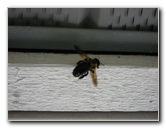 Male Carpenter Bee |
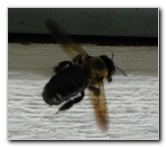 1" Black & Yellow Insect |
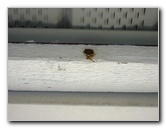
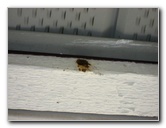 Carpenter Bee Hole |
| Do you have
large flying insects dive bombing your head when you walk outside your
home? Do you hear a sound like a slow & large pencil sharpener being
turned? Then you probably have
Carpenter Bees boring their way through the wood on the outside of your
house.
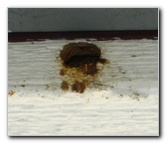
But don't despair, this pictures illustrated step by step instruction guide will help you control and eliminate this pesky insect. First walk around your home and look for any perfectly round 1/2 inch holes which are the entrances to the carpenter bee nests or "galleries". If the nest is currently in use you'll see streaks of brown or yellow fecal matter and piles of sawdust below the holes. You might also encounter the aggressive males, who don't have stingers, active & guarding the nest from early spring to summer. |
||
|
|
||
 |
 |
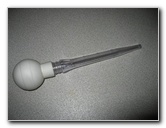 Turkey Baster - Powder Sprayer |
|
Some of the best places to look for signs of a Carpenter Bee infestation are on your house's eaves, pool deck undersides, porch railings, window trim, wood siding, fence posts, fascia boards, outdoor furniture, wooden shakes, window frames and any other exposed wood. If the males buzzing around bother you during your search, use Wasp & Hornet spray to knock them out of commission. Only the female carpenter bees can sting but this rarely happens and usually only when the female is being handled. Once you've discovered some carpenter bee gallery holes, excrement streaks, and sawdust, you can go out and buy one of the following products - Hot Shot Roach Killing Powder (Boric Acid), Drione Dust, Carbaryl 5% powder, or any other dry pyrethroid insecticide dusts that contain sevin, resmethrin, cyfluthrin, or pyrethrin silica gel. All of those chemicals and products act as a desiccant that dries out the larvae and adult bees. To apply the powder you'll either need a professional duster or something more common such as a household turkey baster. Just fill the bulb of the turkey baster with the roach powder or insecticide dust and reattach the plastic tip. Then place the tip of the turkey baster into the hole and puff some of the dust into the carpenter bee galleries. Wear goggles, gloves, and a mask to prevent the poison from touching your skin, being inhaled into your lungs or dropping into your eyes. These carpenter bee nests can extend from just a few inches to several feet depending on how many years the gallery has been reused by generations of the insects. By placing the insecticide powder at the opening of their nest you can stop their lifecycle since the adult bees bringing back pollen will drag the dust to the cells that house the developing larvae & nectar. Repeat the application process several times until you see activity around the holes decrease substantially. Then you can protect any soft woods such as cedar, pine, cypress, or redwood by painting them with an oil based paint. To discourage future generations of carpenter bees from re-using old nests, plug the gallery entrance holes with balled up aluminum foil, wire mesh, wooden dowel pieces, or carpenter's wood glue. |
||
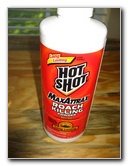 Hot Shot Max Attack |
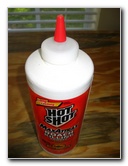 Roach Powder |
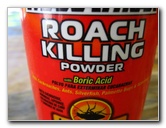 Boric Acid |
|
If you suspect any structural damage to your home's exterior wood, consider replacing it with metal, plastic, or pressure treated wood to prevent future carpenter bee problems and to keep woodpecker birds from pecking apart your wood looking for a juicy larvae meal. Now that you're home is no
longer an attractive residence for these insect pests, try to restrain from
eliminating any other bees you might see around your home since both
carpenter bees and the similar looking bumble bee pollinate food crops and
flowers which is beneficial to the ecosystem. |
||

If you found this guide to be helpful,
please consider making a small donation by clicking on the PayPal.com
"Donate" button located to the right of this paragraph. Thank you!
 (Note: I am not a registered charity. Donations are not tax deductible.) |
Copyright 2024 © PaulsTravelPictures.com
All Rights Reserved ®
Privacy Policy About Paul & Author Contact Info